Stations and streams, not just fields
Model PCs, consoles or streaming setups as fields and casters as referees - capacity and availability rules apply the same way.
LAN or online, pools or brackets: PoolSolve treats gaming stations like fields and best-of series like matches, so an esports bracket gets the same conflict-free scheduling as a field tournament.
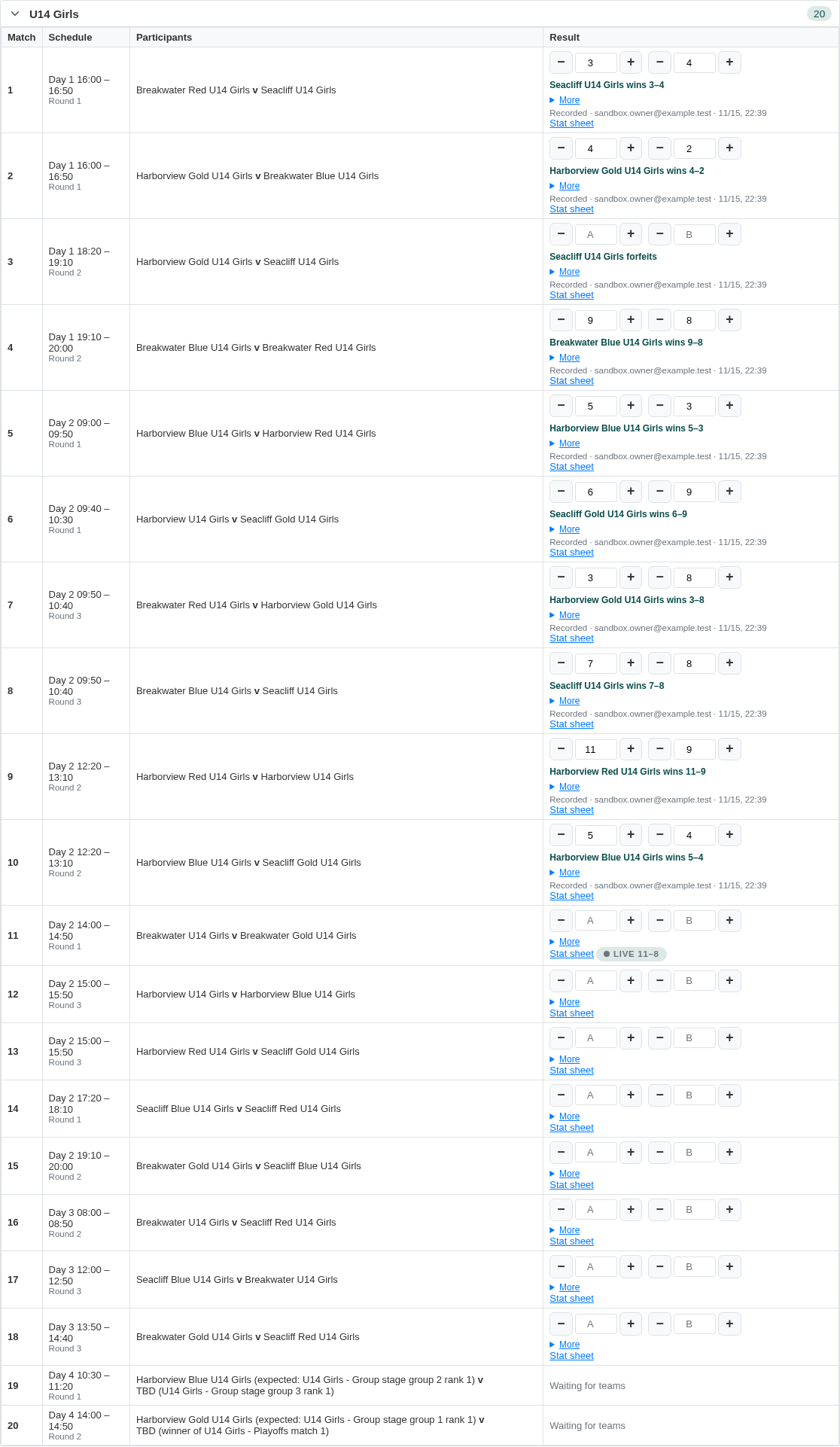
Model PCs, consoles or streaming setups as fields and casters as referees - capacity and availability rules apply the same way.
Best-of marathons are draining: per-team rest windows keep players from going straight from one series into the next.
Group stages feed knockout brackets with seeding from standings - the format esports events already run.
Publish the live schedule link and spectators watch the bracket move in real time - no account needed.
Single or double elimination, groups into playoffs, or Swiss - sizes from 4 to 64 entrants.
Import seeding or set it by hand; bracket placement follows standard seed positions automatically.
Station assignments, match order and staff duties keep best-of series moving on schedule.
Scores and bracket progression update the public page instantly for viewers on-site and remote.
Double elimination is the format esports actually runs on, and it is also the one most scheduling tools fake with a second bracket taped on afterwards. Every entrant must lose twice before leaving, which means a winners bracket feeding a losers bracket that rejoins in a grand final - nearly twice the match count of single elimination and far more interdependence between rounds, because every winners-bracket loss creates work in the lower half. PoolSolve generates the real structure: losers-bracket rounds are placed against station and time constraints like everything else, and the bracket updates live as results drop teams into the lower path. Why it matters: in a game decided by map picks, drafts and momentum, a single bad series should not end a team's whole weekend - the comeback story through the lower bracket is half the entertainment. The format that respects that also respects your venue: the schedule spaces series so the long lower-bracket run a team might make stays playable within booked hours instead of colliding with venue teardown.
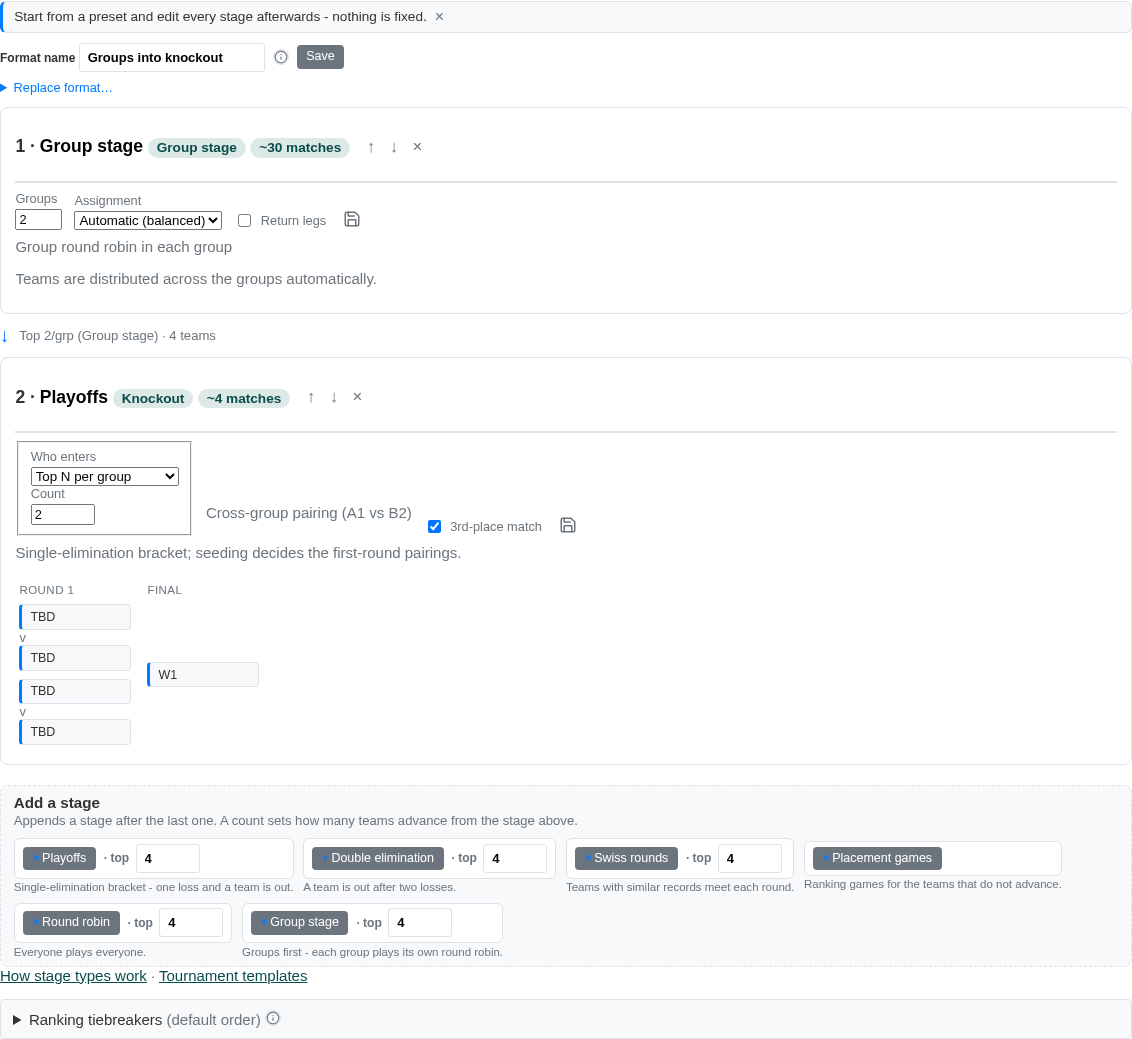
A LAN event's scarcest resource is not time, it is stations - PCs, consoles and streaming setups are finite, expensive and rarely interchangeable across games. Model them as fields and the constraint picture gets honest fast: twenty-four entrants on eight stations means series queue for hardware, matches assigned to the stream station get caster coverage, and capacity rules keep two best-of-fives from colliding on the same rig at once. Station assignments also give players something printed schedules never did at LANs: a specific machine to report to, so nobody wanders the hall looking for a free seat while their series is already overdue. Availability painting works exactly the way it does for fields - a station reserved for finals in the last two hours simply is not available before that, no matter how empty it looks. Combined with per-team rest windows, the solver paces the bracket so players do not walk straight from a ninety-minute lower-bracket series into the next elimination match while the audience watches them fade - pacing is a competitive-integrity feature, not a luxury.
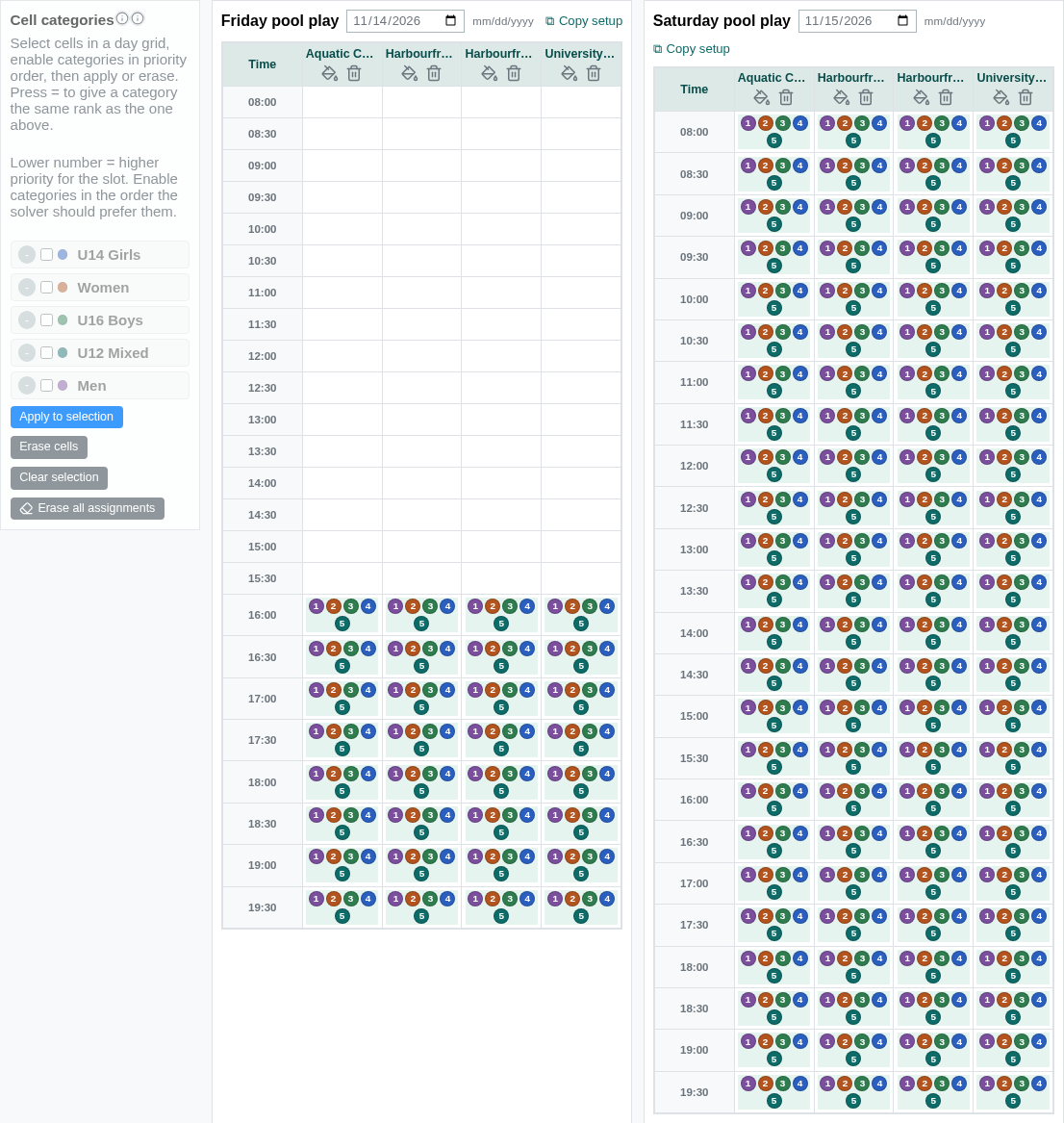
Esports brackets live and die by seeding and series length. PoolSolve places entrants by imported rankings or standings from your pool stage, following standard seed positions so the strongest paths stay apart until late rounds - no first-round meeting of the two favourites just because registration order decided it. For community events without formal rankings, pool play does the seeding work for you: a short group stage produces standings, and the bracket draws its positions from those results rather than guesswork. Series length then sets the event's rhythm: best-of-one keeps an open group stage moving on limited stations, best-of-three gives knockout rounds room for map vetoes and adaptation, and a best-of-five grand final delivers the stakes the whole weekend built toward. Each series is scheduled as one unit with its rest window, so a longer final does not silently wreck the afternoon's plan. Swiss rounds for open qualifiers and groups-into-playoffs for invitationals generate under the same model - pick the shape and the schedule follows, stations and rest included, from a four-person local to a sixty-four-entrant major.
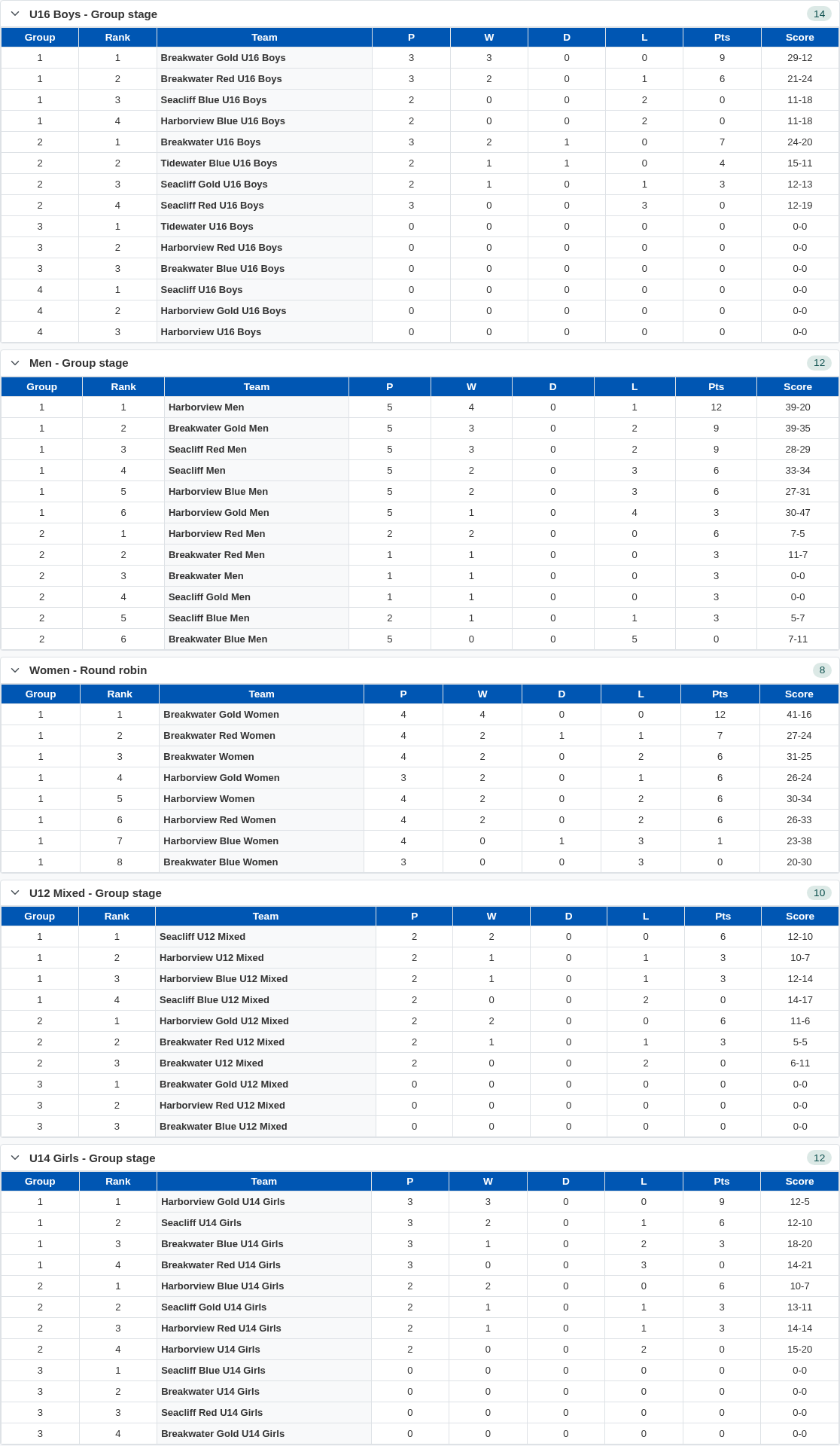
A CP-SAT constraint solver assigns slots to every match - field capacity, referee availability, rest windows and coach overlaps handled.
Round robin, group stage into knockout, placement and medal matches - combine stages into the format your sport needs.
Repeated round robin across up to 30 matchdays - paint one day, copy it onto the rest, and let the solver place every fixture.
Teams, organisations, categories, venues and referees in one workspace - create tournaments and matches your way.
Publish a read-only schedule spectators can follow live, and collect entries through open registration links.