Round robin your way
Single or repeated round robin with seeded ordering - play every team once or run the fixture list again for the second half of the season.
A league is a tournament stretched across weeks - more matchdays, more fields to coordinate, more chances for conflicts. PoolSolve generates the whole season, not just one round.
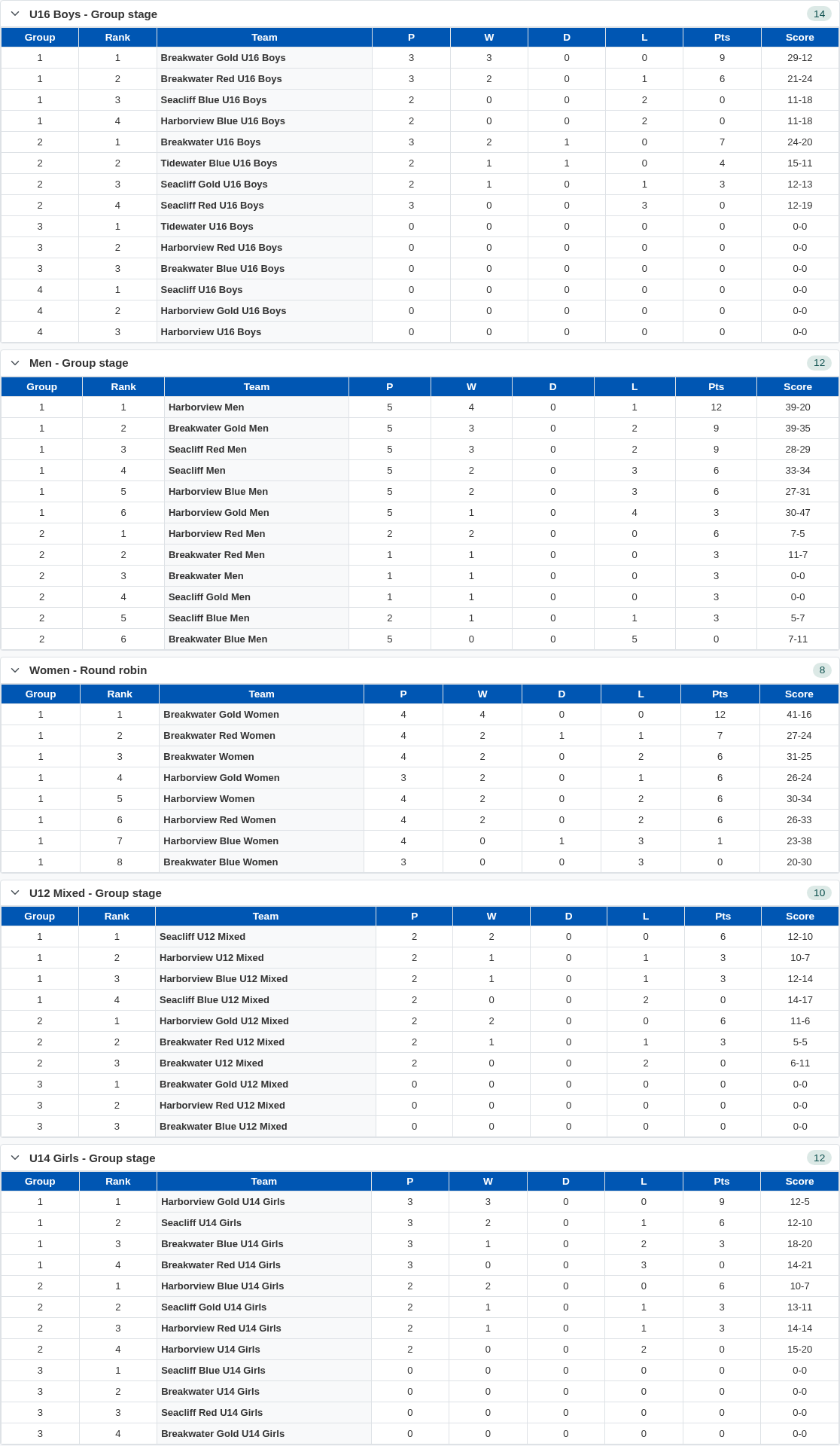
Single or repeated round robin with seeded ordering - play every team once or run the fixture list again for the second half of the season.
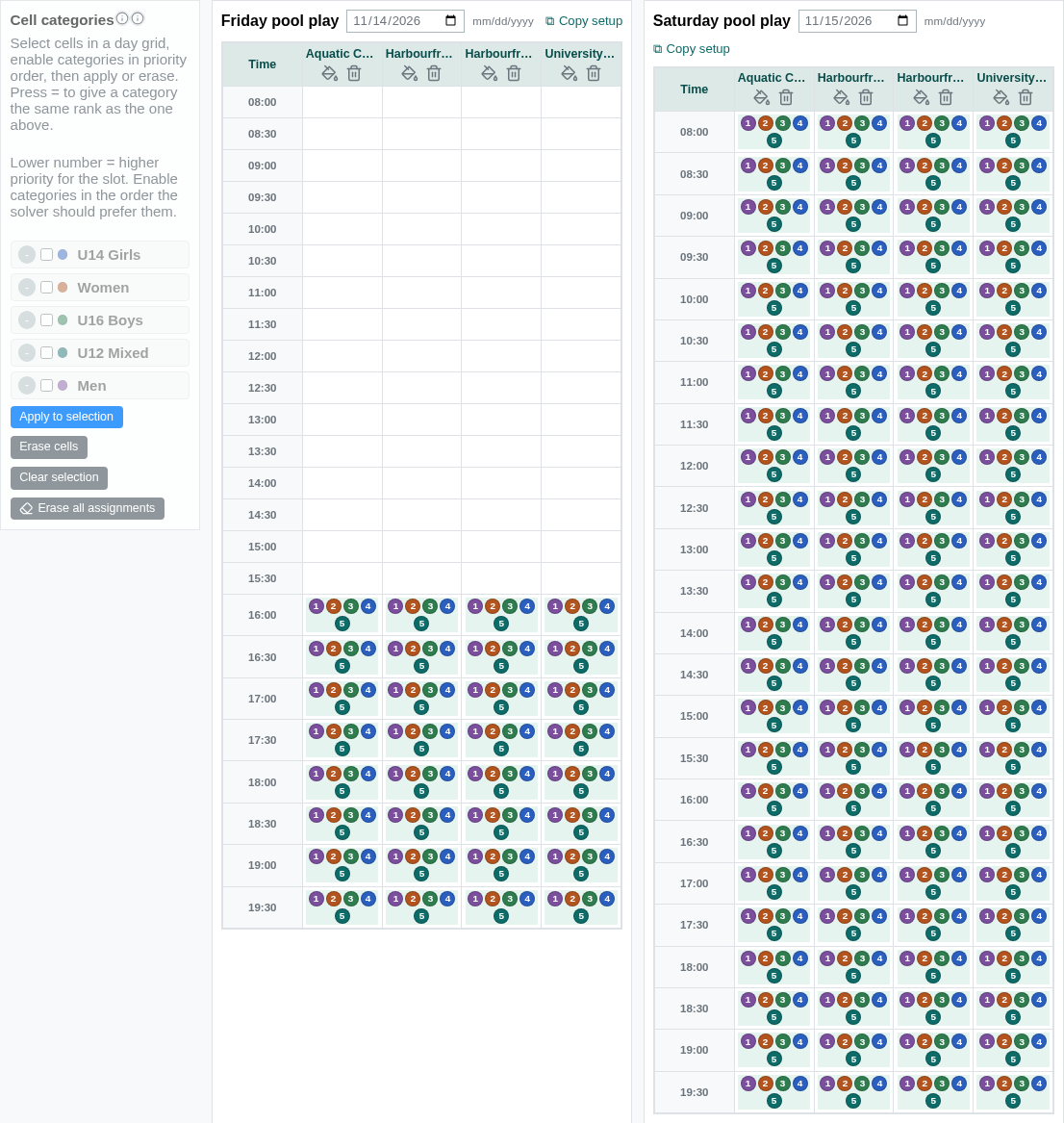
Paint the fields and category slots for a single matchday, then stamp that setup onto the rest of the season - no re-painting thirty grids.
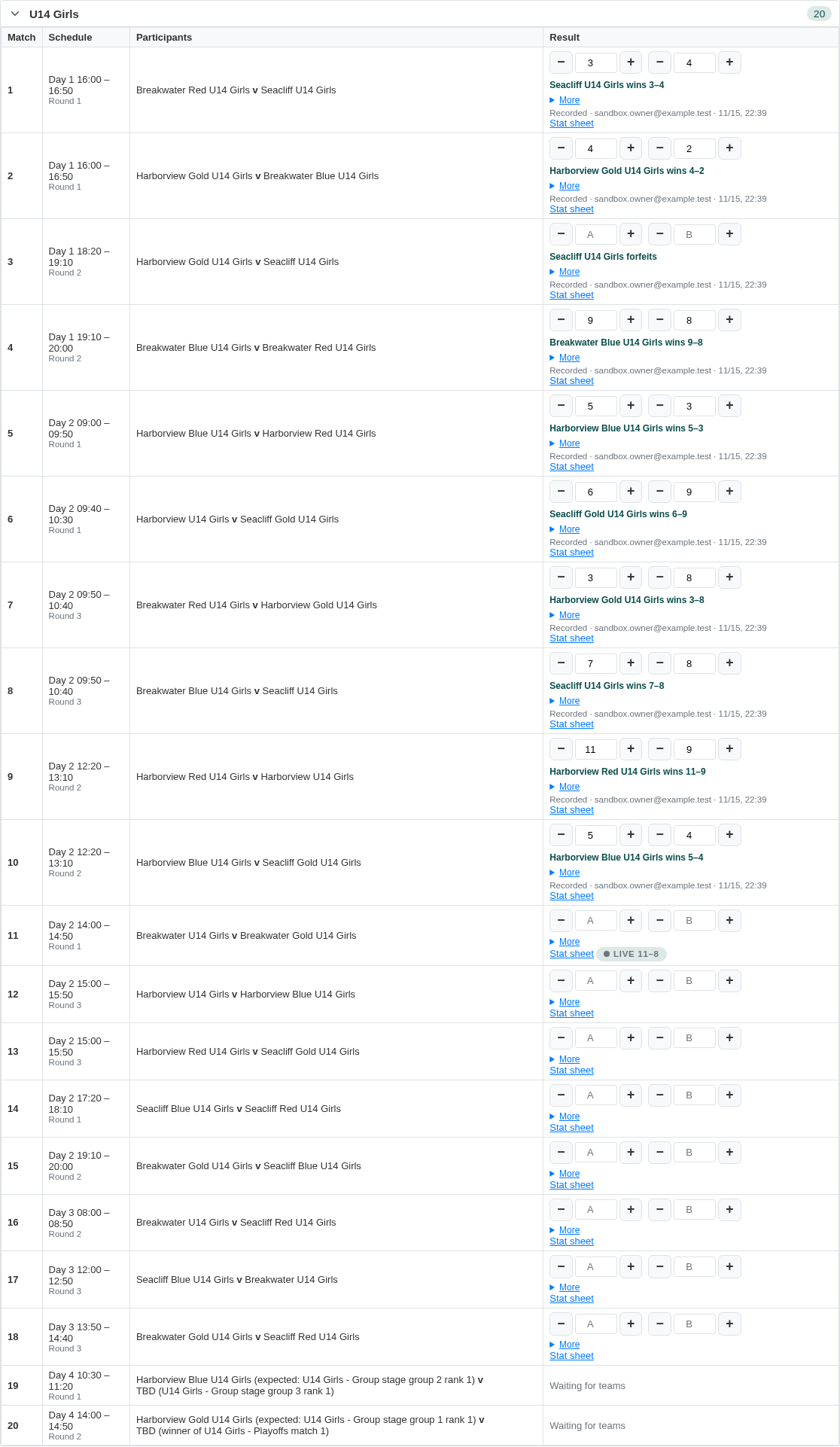
Record results as matches finish and standings stay current - points, score difference and forfeits included.
Field capacity, opening hours, referee availability and team rest windows hold across the entire season - violations are listed, never hidden.
Teams, divisions, weekly matchdays, and whether each pairing meets once or home-and-away.
The generator alternates venues so no team travels or hosts twice in a row more than necessary.
Clubs sharing one field never collide; the solver interleaves their home dates automatically.
Postponements slot back in around fixed rounds - the fixture list stays coherent all season.
Season-long home and away balance is harder than it looks on an empty grid. Over twenty matchdays, a naive fixture list can quietly send one club on the road three weeks running while another never leaves home - a competitive and political problem that surfaces halfway through winter, when the aggrieved club finally counts its away trips and demands an explanation. PoolSolve alternates venues deliberately: no team travels or hosts twice in a row more than necessary, and repeated round robins flip the fixture so the second half of the season mirrors the first at the opposite ground. Balance also has to respect reality - holidays, venue closures and cup weekends leave gaps the generator works around instead of ignoring, because a season that pretends Easter does not exist just breaks later. The result is a fixture list a fixtures secretary can defend in a committee meeting: every team's travel load is visible, comparable and produced by rules applied evenly to everyone, not by whoever asked first or shouted loudest.
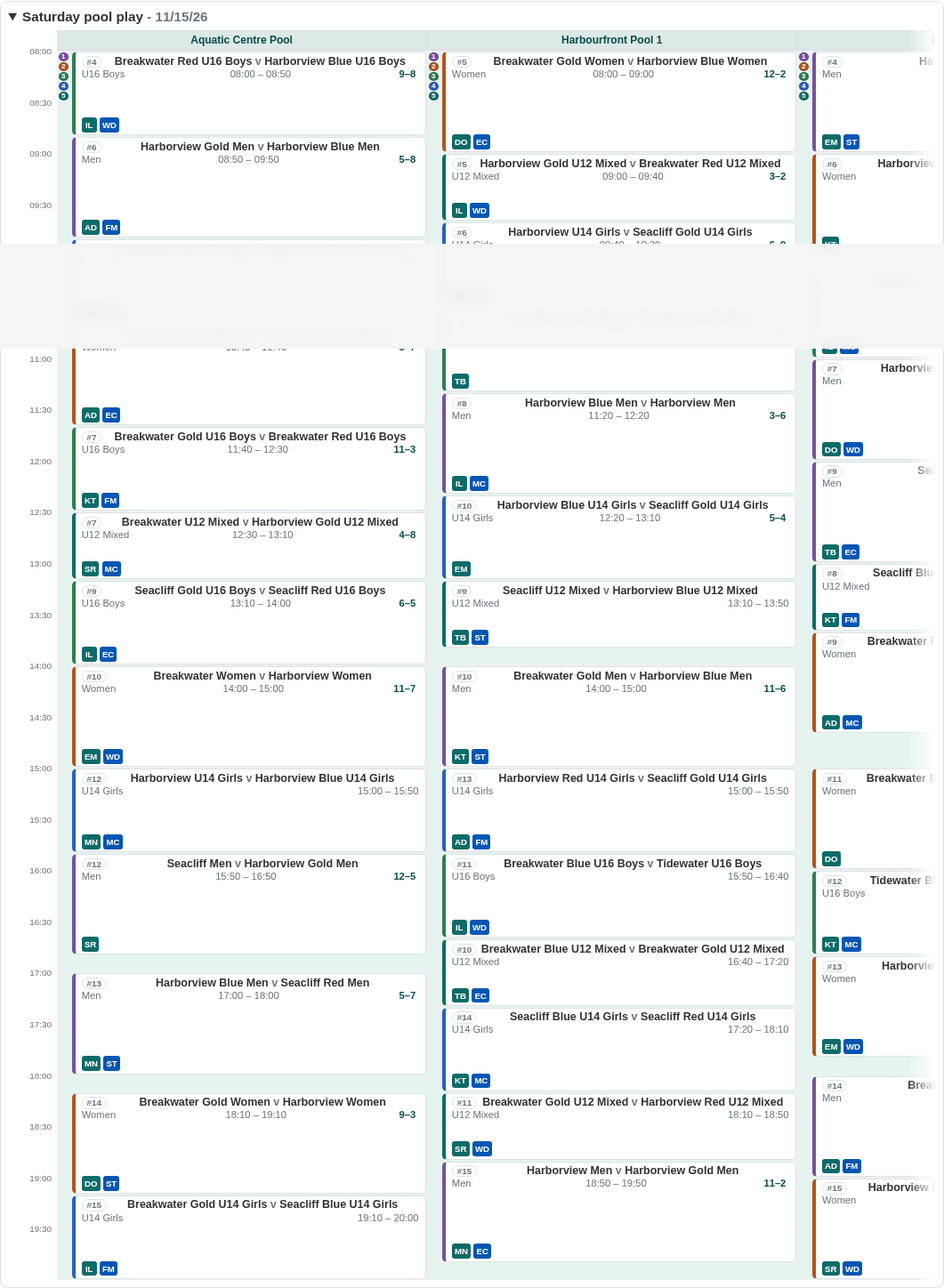
Shared venues are where league scheduling usually collapses. Three clubs train and play in the same sports hall, the school gym hosts both your Saturday divisions, the community pitch serves a senior and a youth section - and every pair of home fixtures competes for the same weekend slots. PoolSolve models the venue itself as the scarce resource: clubs sharing one field never collide because the solver interleaves their home dates automatically, and painted matchday templates make the pattern repeatable week after week. Paint the fields and category slots for a single matchday once, stamp that setup across the whole season, and shared-venue conflicts are prevented by construction rather than discovered through an angry phone call on a Friday night. The same model scales to multi-venue clubs too: a field shared between two sites, or a second hall that only opens in January, is just different painted availability. When the hall adds a competing booking mid-season or loses a day to maintenance, repaint that day's availability and re-solve the rounds still ahead - everything already played stays put.
Every league season hits the same moments: a waterlogged pitch in November, a flu-ridden squad in January, a cup run that eats a league weekend. The fixtures have to bend without breaking, and a printed table of dates cannot bend at all. Because PoolSolve keeps the season as one coherent model, postponements slot back in around fixed rounds - played matches and already-published matchdays stay pinned while the solver finds where the displaced game fits among the rounds remaining, instead of leaving it floating in an email thread nobody owns. The rearranged slot still respects every rule the original schedule did: rest windows, venue hours, referee cover and home-away pattern all apply to the new placement too. Standings keep counting results the moment they are recorded, so a rearranged game updates the table the week it is finally played, not whenever someone remembers to edit a spreadsheet. And because the public schedule link never changes, players and parents see the new date the moment it is published - no mass email, no outdated PDF pinned in the clubhouse.
A CP-SAT constraint solver assigns slots to every match - field capacity, referee availability, rest windows and coach overlaps handled.
Round robin, group stage into knockout, placement and medal matches - combine stages into the format your sport needs.
Teams, organisations, categories, venues and referees in one workspace - create tournaments and matches your way.
Publish a read-only schedule spectators can follow live, and collect entries through open registration links.
Run LAN events, ladders and online brackets with the same solver - stations instead of fields, casters instead of referees.