A link, not a login
Spectators open the public schedule URL - no account, no app install. Results, standings and field grids update as you publish.
One link, always current: share the schedule before the event and every published change reaches spectators automatically.
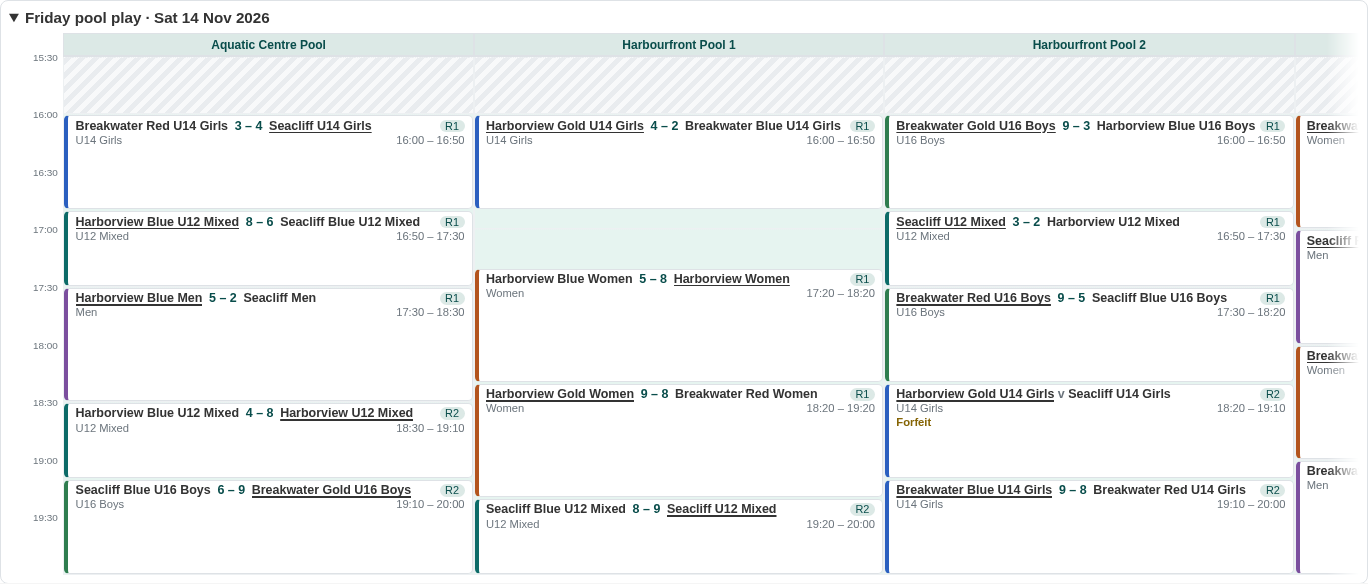
Spectators open the public schedule URL - no account, no app install. Results, standings and field grids update as you publish.
The public board refreshes itself when you publish changes - spectators always see the current state.
Collect entries through a public registration link; submissions land in your tournament for review.
Post the link on your club site, socials or the venue door - it is read-only and can be revoked by regenerating the token.
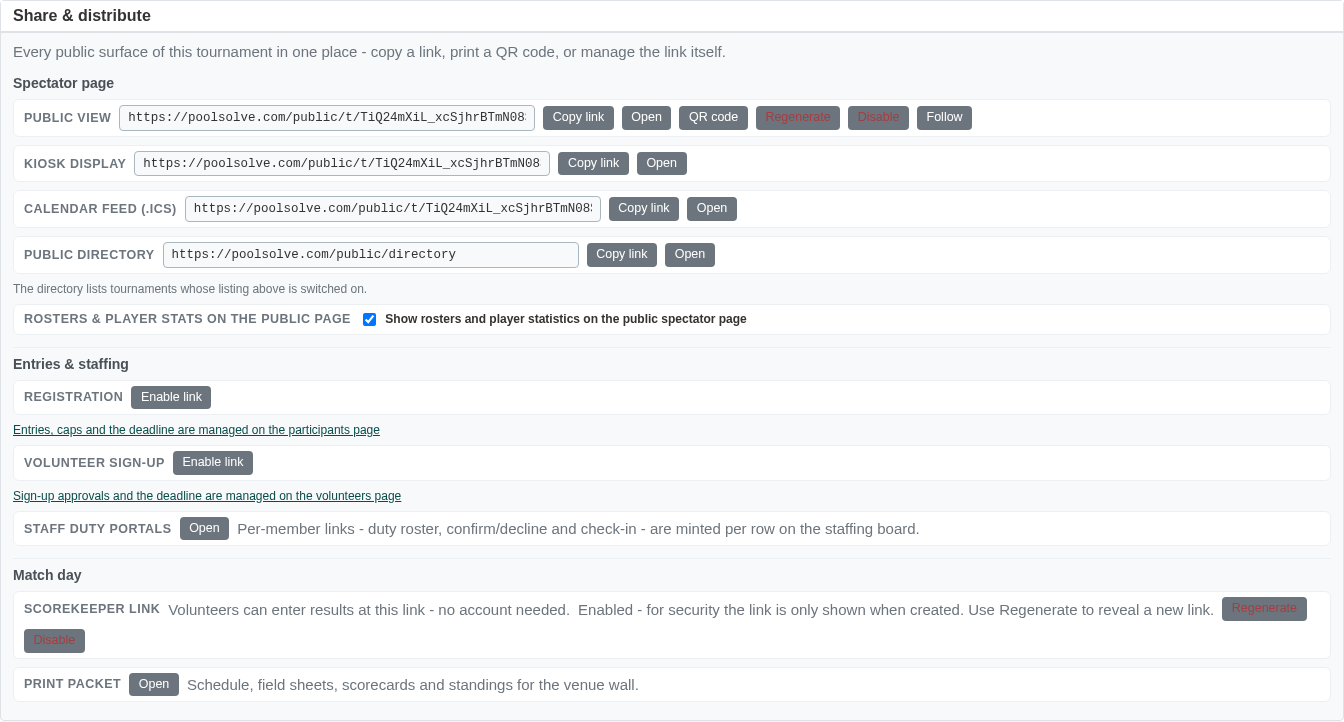
Each schedule gets a public link, an embeddable widget, a kiosk view and a calendar feed - no app needed.
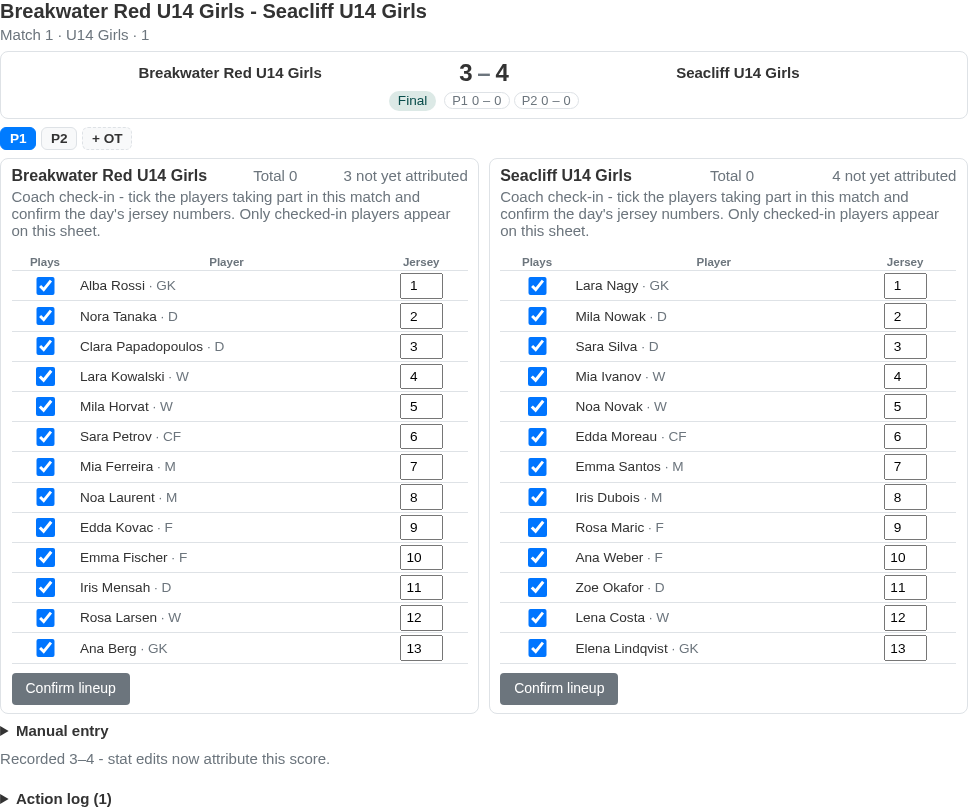
Edits, postponements and results appear on every link the moment they are saved - no re-sharing.
Follow one team, one field or the whole day; spectators pick their own view without an account.
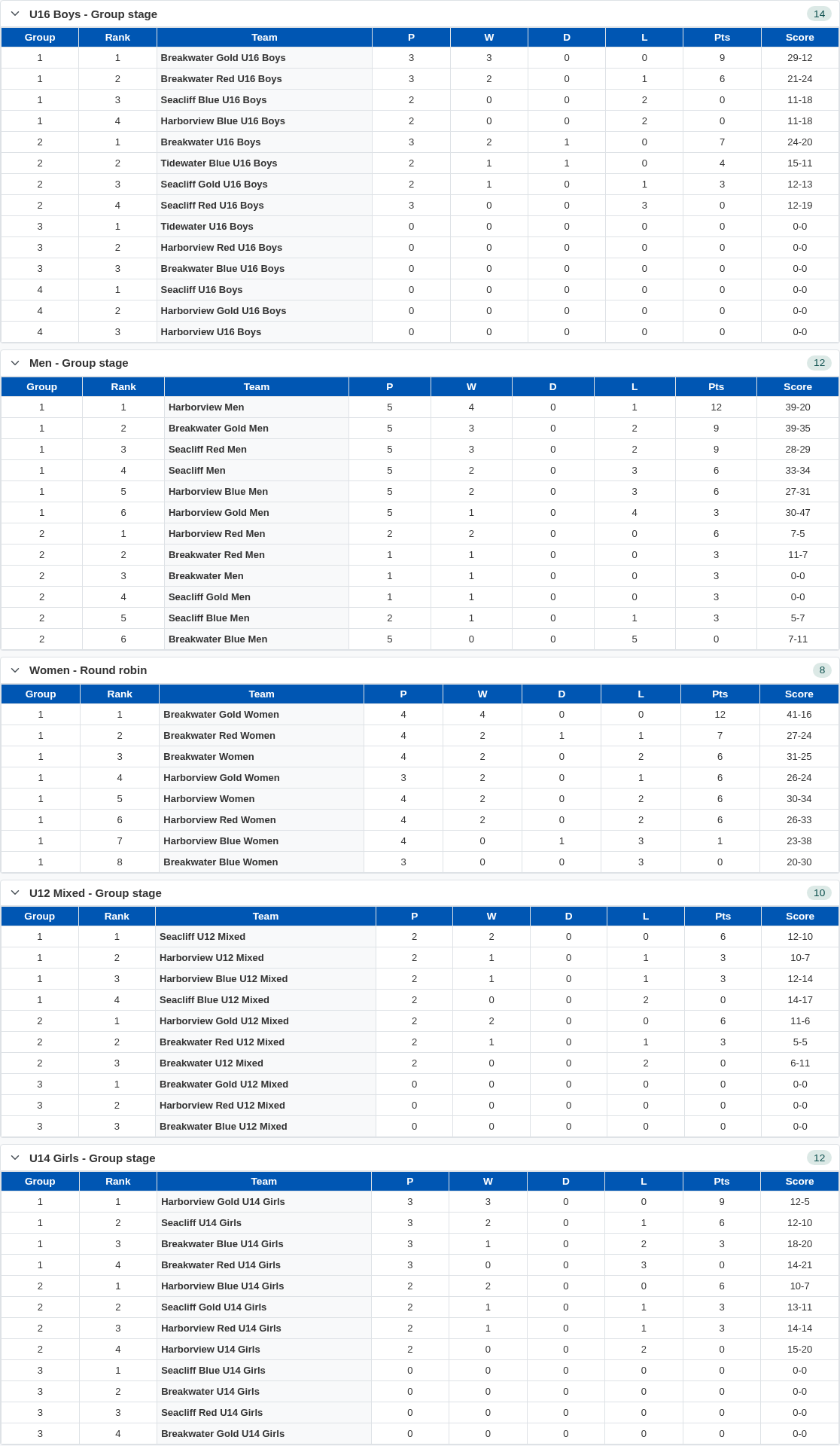
Times, venues and live standings stay legible on a phone - the format people actually check courtside.
Every live page also prints cleanly and exports to CSV for on-site result sheets.
Spectators do not all watch the same way, so publishing should not be one-size-fits-all. The public link covers phones and shares - send it once before the event and it stays the canonical address for everything after, the same URL in the invitation email and on the door sign. The embeddable widget drops the same live board into your club website, so visitors checking fixtures on your own pages see the current version without leaving your site or loading a second tool. The kiosk view is built for venue screens: a lobby TV or a tablet at the entrance can cycle the day's grids and standings hands-free, answering the where-do-we-play-next question before it reaches the desk. And the calendar feed lets coaches and parents subscribe in their own calendar app, so next Saturday's times appear where they already look. All four channels read the same published state - update once and every surface reflects it - nothing to re-send, no version drift between the website, the lobby screen and a subscriber's calendar.
The usual spectator experience is a stale PDF: the schedule was accurate at 7am, a court flooded at 10, and by noon nobody trusts anything but the rumour mill. Publishing live inverts that. Every edit, postponement and recorded result appears on every link the moment it is saved - spectators refresh or simply watch the board update itself, and there is no version two of the PDF to circulate or retract. Spectators filter the view themselves: follow one team across the day, watch a single field, or scan the whole event, all without an account or an app install. That self-serve filtering quietly removes a whole category of questions from the check-in desk, because the answer to 'when does our next game start' is on the phone already in everyone's hand. And when a schedule is no longer meant to be public - a test event, an internal run-through, a league that finished - regenerating the token revokes the old link: access control without chasing down forwarded copies - the old address simply stops resolving.
Most schedule checking happens on a phone screen held at arm's length courtside, in bright light, by someone in a hurry between games - not on a laptop at a desk with a full-sized calendar open. The live board is designed for exactly that reader: times, venues and standings stay readable on small screens, filtering collapses a hundred-match day down to the handful a parent actually cares about, and there is nothing to install, no account to create and no app store in the way. For the minority who still want paper, every live page also prints cleanly - a printed grid for the clubhouse noticeboard stays consistent with the link because it came from the same published state, not from a screenshot taken an hour ago and already wrong. Scorers and statisticians are not forgotten either: the same view exports to CSV, so the day's results can move into whatever sheet or league system they feed next without anyone re-typing scorelines from a phone photo of a flip chart.
A CP-SAT constraint solver assigns slots to every match - field capacity, referee availability, rest windows and coach overlaps handled.
Round robin, group stage into knockout, placement and medal matches - combine stages into the format your sport needs.
Repeated round robin across up to 30 matchdays - paint one day, copy it onto the rest, and let the solver place every fixture.
Teams, organisations, categories, venues and referees in one workspace - create tournaments and matches your way.
Run LAN events, ladders and online brackets with the same solver - stations instead of fields, casters instead of referees.