Round robin
Single or repeated round robin with seeded ordering - classic league and pool play, fully generated.
From a single round robin to multi-stage championships - define the stages and PoolSolve generates every match they imply.
Single or repeated round robin with seeded ordering - classic league and pool play, fully generated.
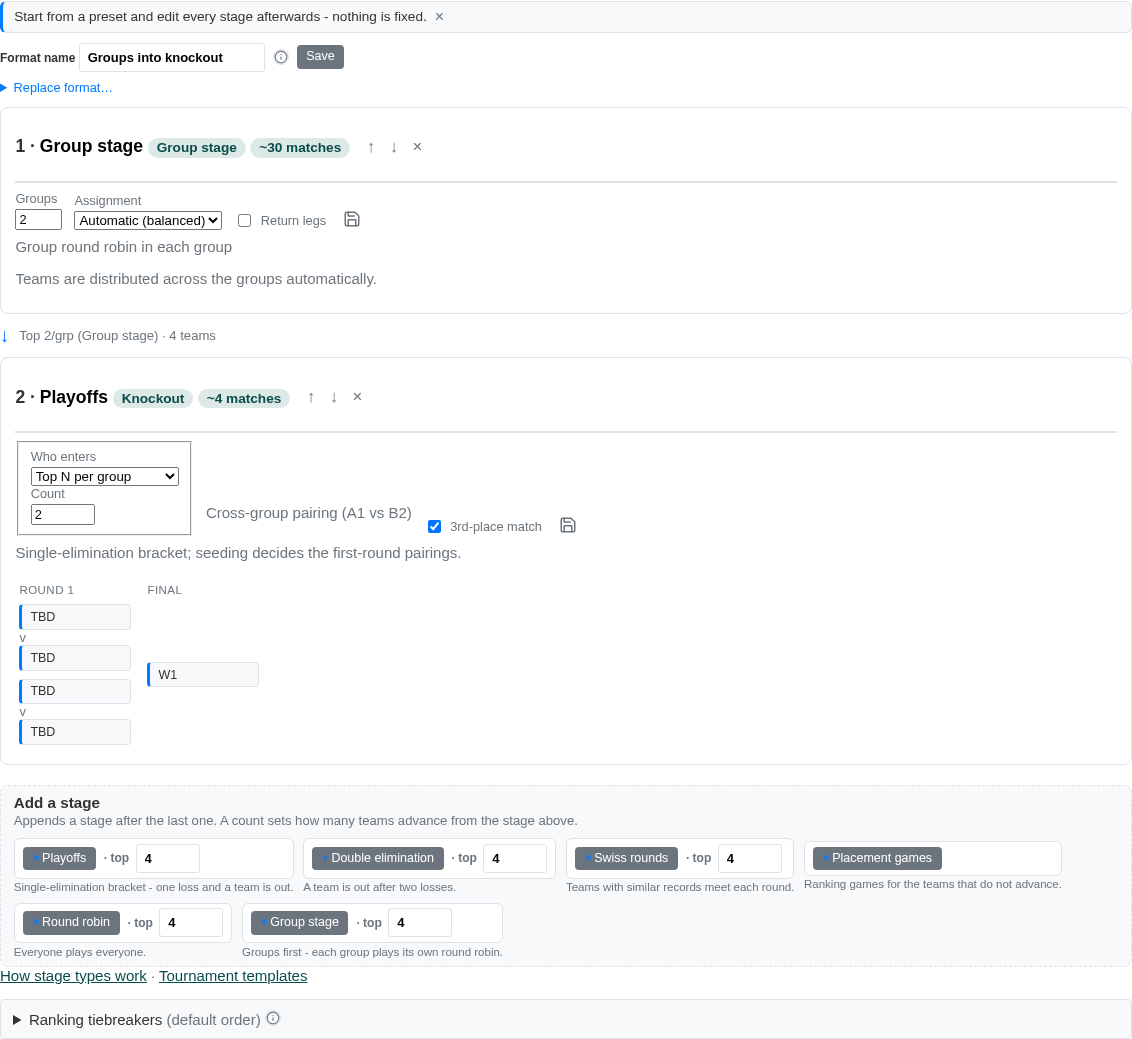
Group stages feed qualification slots into a knockout bracket, under the seeding rules you choose.
Rank every team: placement rounds and medal games are generated as part of the same schedule.
Chain stages freely - each stage's match generation understands the teams coming out of the one before.
Round robin, groups plus knockout, single or double elimination, Swiss, placement matches - chain them in any order.
Choose how teams feed each stage and how many advance, with seeds or standings position driving placement.
See the full structure - group draws, bracket paths and placement games - before a single match is generated.
One click produces every pairing; reseeding or a late team swap rebuilds only the affected stage.
The right format is arithmetic before it is preference. A round robin guarantees everyone plays everyone, but it costs n times n minus one halved matches - eight teams means twenty-eight games, which may need two days and three fields to fit. Single elimination needs only n minus one matches, ideal when time is the binding constraint, while double elimination roughly doubles that count to give everyone a second life, and Swiss lands in between with a round count near the log of your field size and no early eliminations at all. PoolSolve generates any of them, so the decision can be honest: how many entrants you expect, how much venue time you can actually book, how many matches each team should be guaranteed before going home, and how decisive the finish needs to be. A fundraiser that promised everyone three games runs a different shape than a qualifier that needs one winner by Sunday. Run the numbers for your day, pick the format that fits - then combine stages when a single shape cannot deliver both guaranteed games for everyone and a decisive finish.
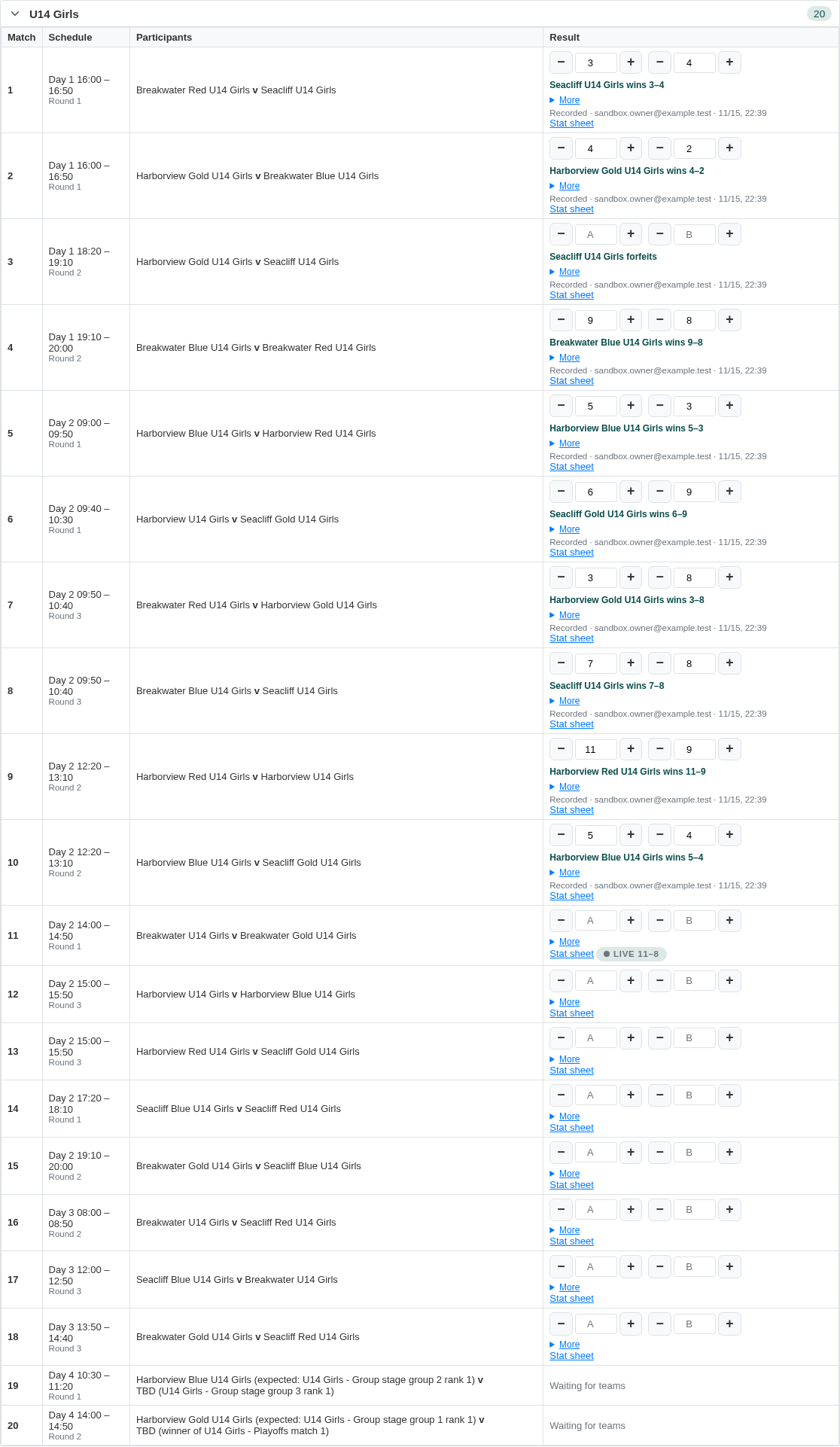
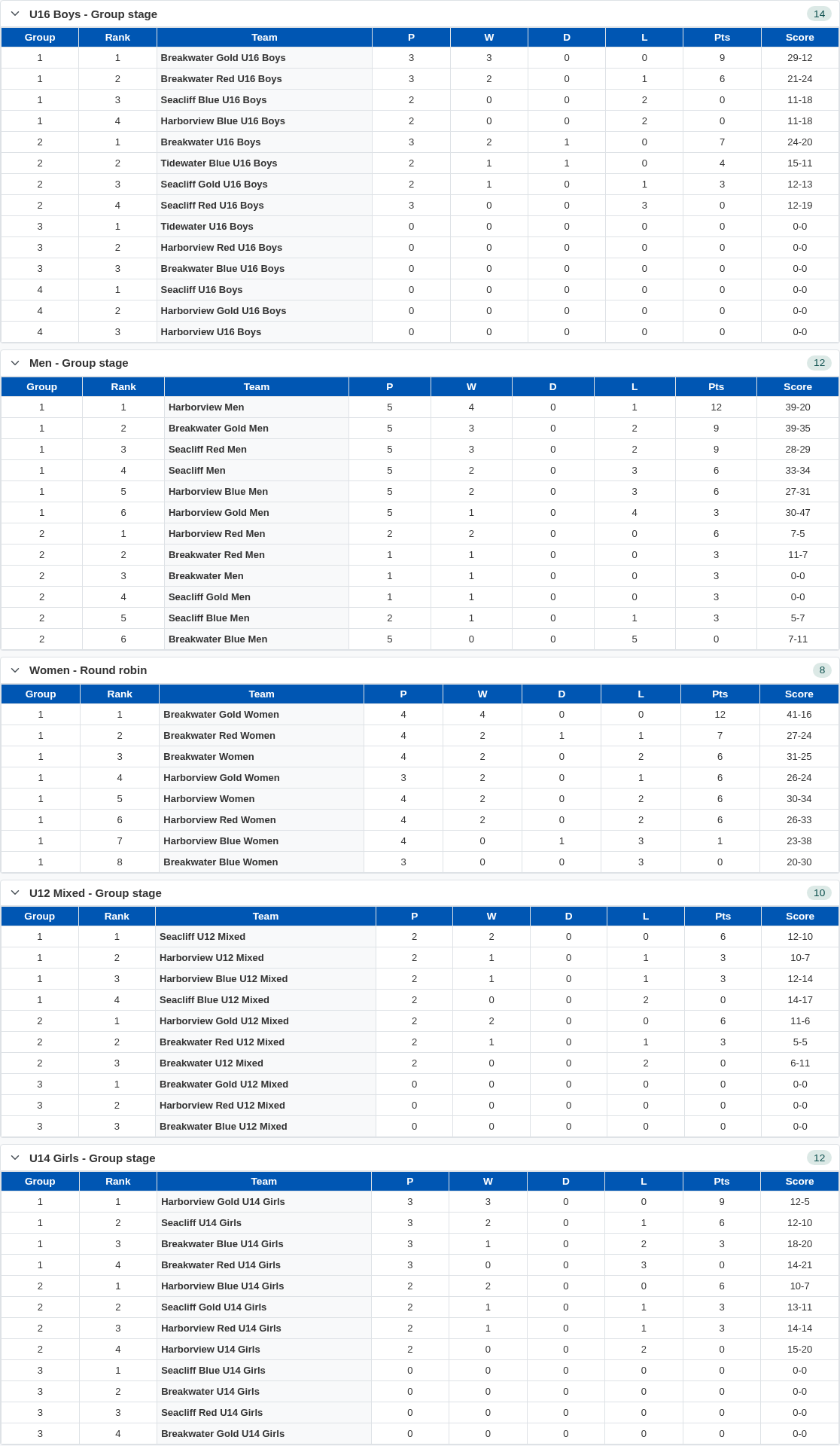
Most real competitions are not one format - they are a chain, and the chain is where planning usually gets messy. Group stages give every entrant several guaranteed matches, then qualification slots feed a knockout bracket that produces a winner efficiently. PoolSolve treats each stage as a generated unit that understands the teams arriving from the previous one: group standings seed the bracket automatically, and non-advancing teams do not have to go home early - placement rounds rank them into final positions while medal matches settle the podium. The practical payoff is that a Saturday-pools, Sunday-knockout structure stays coherent end to end: one draw, one schedule, one standings model feeding the next stage instead of a hand-copied list of qualifiers typed into a bracket template at midnight. You can also reshape the chain before committing - swap group sizes, change how many teams advance, add a consolation stage - and see the match count move before anything is generated. Reseeding after groups or swapping a late withdrawal rebuilds only the stage that changed, so the morning's played matches stay untouched.
Where teams enter a bracket decides how the event feels. Good seeding spreads the strongest entrants across groups and bracket halves so the best matches happen late rather than in round one; bad seeding can produce a quarter-final that plays like a final and a hollow bracket on the other side. In PoolSolve you control how teams are placed - seeded ordering for round robins, qualification slots into the knockout under the seeding rules you choose - so the draw reflects your ranking information instead of the order teams happened to register in. Seeding is worth the effort even when your information is imperfect: approximate seeds beat pure chance, because the goal is keeping the strongest paths apart, not predicting the winner in advance. When seeds shift because a late entry joins or standings move, reseeding rebuilds only the affected stage rather than the whole tournament, so fixing the draw never means starting over - and the visible bracket structure lets you sanity-check the result before the first match is scheduled.
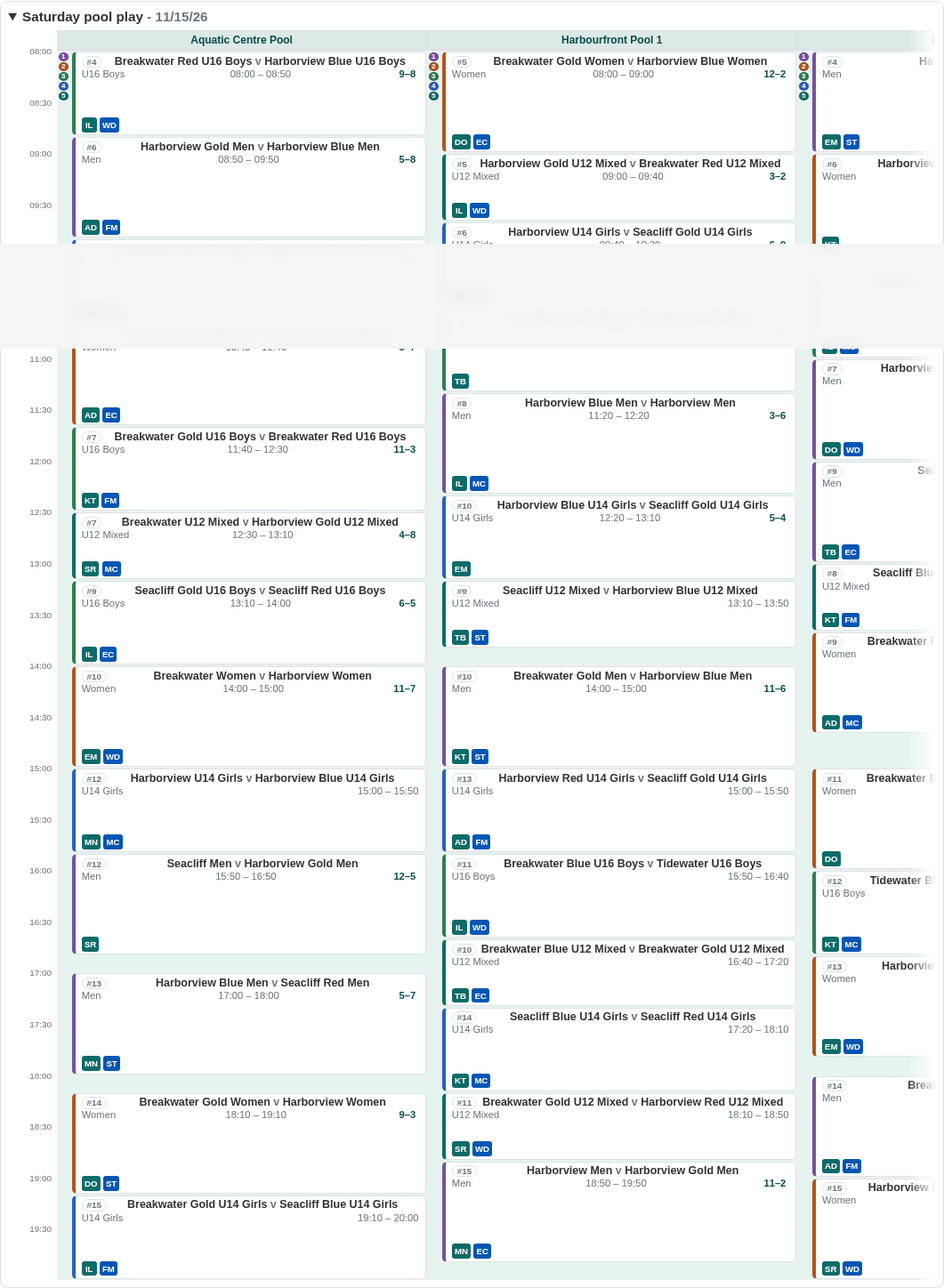
A CP-SAT constraint solver assigns slots to every match - field capacity, referee availability, rest windows and coach overlaps handled.
Repeated round robin across up to 30 matchdays - paint one day, copy it onto the rest, and let the solver place every fixture.
Teams, organisations, categories, venues and referees in one workspace - create tournaments and matches your way.
Publish a read-only schedule spectators can follow live, and collect entries through open registration links.
Run LAN events, ladders and online brackets with the same solver - stations instead of fields, casters instead of referees.